In Pursuit of Profit
Read our expert article below or sign up to get articles sent to your inbox.

|
“Finance” is a broad term every business leader has heard, but it can mean many different things.
Businesses have banking relationships, investments they need to track, fundraising and financial analysis needs. Corporate Financial Planning and Analysis (FP&A), the work performed by Financial Analysts, is a complex specialty within Finance that all successful businesses need in some degree. There are multiple FP&A components of which every business requires a different combination. This complexity makes hiring to satisfy your FP&A needs difficult. To make matters harder, many accounting and FP&A functions can overlap. So how do you know if you need to hire a dedicated Financial Analyst or a hybrid accountant? It helps to first understand the components of Corporate FP&A, the value each adds, and how much time each activity should take.  A guest post from our partners at CFO Selections.
With an increased focus on financial planning and analysis (FP&A) in recent years, many companies have begun asking, “Do accountants do financial planning?” For cash-strapped startups and small businesses the temptation to simply add to their accountant’s workload is strong. However, this is not a wise decision. While overloading any one role presents problems on its own, entrusting accountants with FP&A poses its own unique risks. The differences between accounting and FP&A necessitate that it be handled by separate personnel with unique skillsets and performance objectives. Understanding what FP&A entails and what is at stake can help organizations make smart decisions about who should handle this critical responsibility.  We see a variety of circumstances in our practice at ASP, whether it be outsourced consulting needs, or an organization growing and needing to consider a fulltime resource. Our recruiting efforts are responding to those fulltime needs daily. The pandemic has shifted the business landscape significantly, making strong financial leadership universally important.
Small companies that previously had their CEO at the helm of financial operations have realized that they need a fulltime controller to oversee their accounting operations and staff. With the increased demands of operating during financially uncertain times, CEOs need to focus on their core role of running the company overall (pivoting and shifting as needed), while entrusting another professional with the financial management of the company. As a result, hiring a fulltime controller is no longer optional these days with the following business trends occurring:  There are plenty of resources about the benefits of outsourcing, yet many business owners are still resistant to outsource their bookkeeping.
Even businesses that outsource other activities tend to keep a tight grasp on their financial functions. Because cash flow is so important to small businesses, bookkeeping and accounting tend to be some of the last functions that business owners are willing to relinquish control of when they formulate strategic growth plans. But why? Why are some business owners still against outsourcing their bookkeeping?  Since March, 62% of employed Americans have worked from home, which is more than double the previous figures from earlier in 2020. Furthermore, 59% of these employees want to continue to work remotely, moving forward even after public health restrictions are lifted. This sentiment has led businesses to examine the costs of maintaining a remote workforce closely. They are asking:
 2020 has been a year of disruptions and reactions. Companies have reacted to supply chain interruptions, new regulations, shifting market demand, and staffing issues, among other challenges with some faring better than others.
Marcus Wagner explains, “Because of COVID-19, businesses and their accounting departments are going through a cycle of shock (and maybe some denial), survival, learning and adaptation. For those of you who haven’t done so yet, it’s critical to begin the shift into the learning and adaptation phases as quickly as possible so we emerge stronger as a result." Adapting has been critical thus far and will continue to be as we move into 2021. An adaptation mindset allows your business to respond to current challenges and anticipate future disruptions to generate better financial outcomes. Companies with accounting teams that adapt quickly can minimize revenue loss during a downturn and capitalize on revenue opportunities faster during a recovery period.  A guest post from our colleagues at CFO Selections:
When adversity hits, the knee jerk reaction is to swiftly cut spending across the entire organization, but that response is a mistake. Strategic cost cutting can keep a business going through tough times, but it must be approached with long-term value in mind. Reducing costs should abide by three essential principals:
Evaluate your spending and determine where you can cut costs to weather tough times while still protecting critical functions, minimizing long-term expenses, spending where it could end up costing more not to do so, and looking for opportunities to reduce waste. 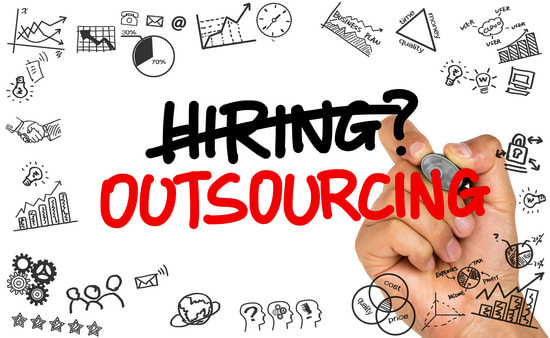 Outsourcing is not a new concept. In fact, according to survey data, 37% of small businesses outsource at least one business process already. More technical tasks like accounting, IT services, and digital marketing are the most likely to be outsourced, but any business process can be handled by a third-party.
With less than 15% of business owners and managers reporting that they “feel like they are spending their time on the right activities,” outsourcing provides a huge opportunity to reprioritize your activities and drive the business forward. As Matthew Grattan explains, “As costs and competition increase, it’s time to ditch the ‘I can do it all myself’ mentality and offload those onerous back-office tasks.” While outsourcing can certainly be used to offload tedious activities, it can also be used strategically to obtain professional expertise in critical areas. Outsourcing frees up more time for selling and merchandising, which is especially important during times of significant growth. Many companies rely heavily on outsourced activities to scale up operations as new business opportunities become available. But what should small businesses outsource exactly?  The word ‘downsizing’ is often accompanied by a cloud of negative connotations, but it is rarely the result of poor employee performance or leadership mismanagement. Instead, downsizing usually results from other factors like an economic slowdown, overcrowded market, plant closure, or manufacturing outsourcing. Downsizing is simply part of running a business, just like managing rapid growth, which means that leadership must plan, manage, and execute it correctly.
At the most basic level, managing downsizing requires four steps: developing selection criteria, determining how much notice to give, providing outplacement support to employees that have been let go (where applicable), and protecting employee productivity and morale among retained workers. These activities are typically considered part of HR’s purview, but downsizing has implications that trickle down into other areas of the business. There are numerous bookkeeping implications during downsizing as well.
|
SUBSCRIBE:DOWNLOAD:
DOWNLOAD:
Categories:
All
Archives:
November 2026
|

 RSS Feed
6/18/2021